
Is Bluer Always Better? The Truth About GHK-Cu Serum Color, Copper Concentration, and Formulation Quality
In this article
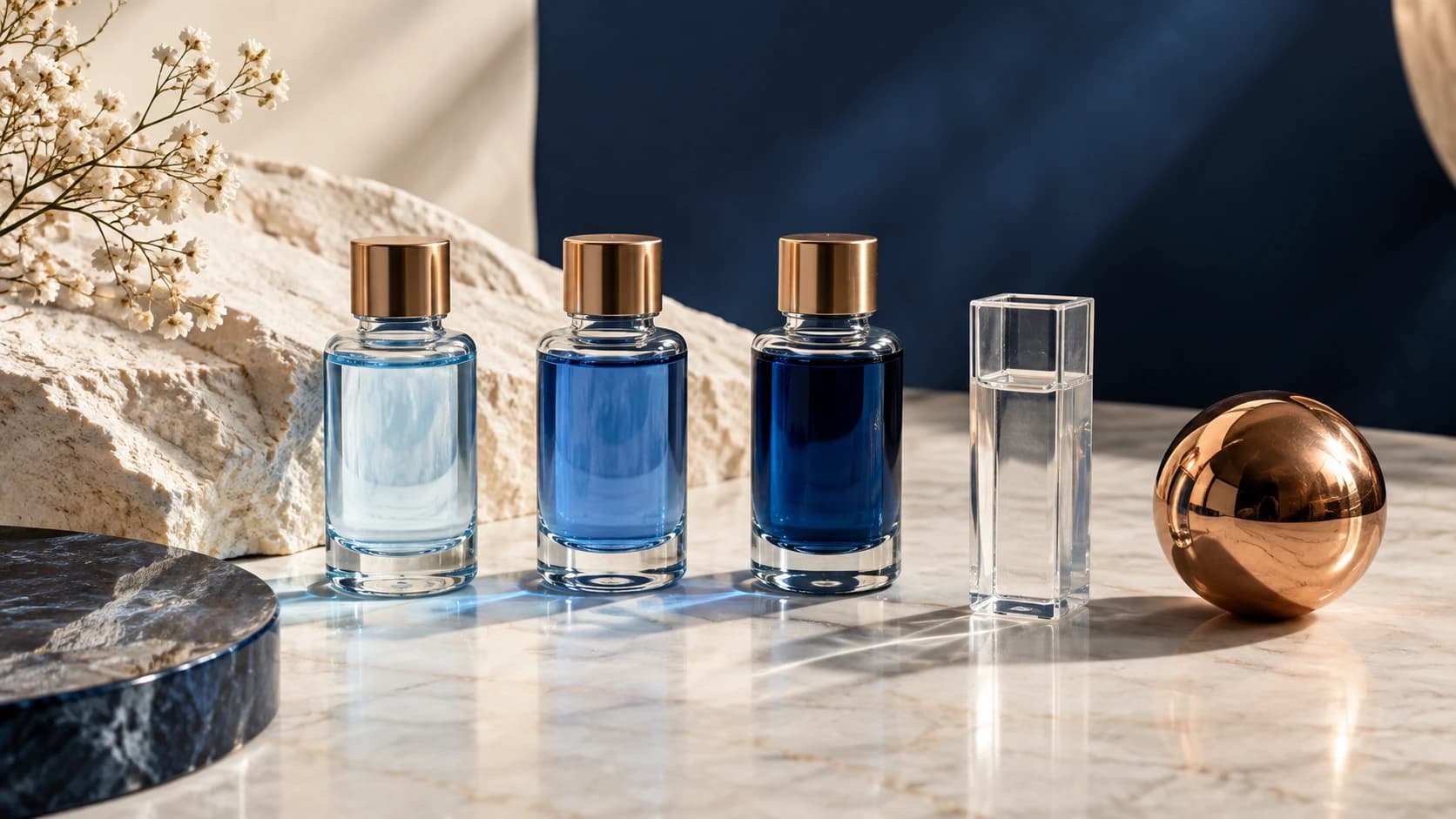
When browsing skincare subreddits or aesthetic forums, it is common to see enthusiasts evaluating active ingredients by sight. A recent discussion on r/AusSkincare highlights a widespread consumer assumption: "It’s a deep, deep blue, exactly the same colour as the copper sulphate crystals we used to admire in chemistry classes, so it must have plenty of copper ions in it."
It is an intuitive mental shortcut. After all, copper tripeptide-1 (GHK-Cu) aqueous solutions naturally exhibit a striking blue hue due to the coordination complexes formed between copper(II) ions and the glycyl-histidyl-lysine peptide sequence. However, equating deep visual blueness with superior formula potency, high active concentration, or clinical efficacy is a common misconception in peptide chemistry.
For clinics, private-label brands, researchers, and discerning individual buyers, understanding the science behind copper peptide color prevents costly formulation mistakes and clarifies what actually dictates product quality.
The Chemistry of Color: Why GHK-Cu Turns Blue
To understand why a serum is blue, we have to look at molecular coordination. GHK is a naturally occurring tripeptide with a high affinity for transition metal ions, particularly divalent copper (Cu2+). When the peptide binds to copper, it forms a stable complex where the nitrogen atoms of the imidazole and peptide groups coordinate with the copper ion. This interaction alters how the solution absorbs light, resulting in that characteristic azure or royal blue color.
However, the intensity of the blue color depends on several variables that have little to do with raw peptide efficacy:
- Copper-to-Peptide Molar Ratio: If a formulation contains unbound copper salts (such as copper sulfate) added purely to darken the liquid, it will look intensely blue while offering none of the targeted biological signaling benefits of the actual GHK-Cu tripeptide.
- Solution Concentration and pH: Minor shifts in pH or solvent composition can alter the light-absorption properties of copper complexes, making a lower-concentration formula look darker than a highly concentrated one depending on the surrounding excipients.
- Interfering Dyes and Additives: Some commercial formulators introduce cosmetic colorants or botanical extracts that skew the perceived depth of color, leading consumers to misjudge the active payload.
Relying on visual saturation as a metric for quality overlooks the complex stability parameters required to keep tripeptides viable in solution.
The Pitfalls of Visual Grading in Professional and Research Settings
For wholesale buyers, procurement managers, and formulators, judging raw materials or bulk serums by eye is an unreliable quality control method.
- Unbound Copper vs. Bound Tripeptide: As noted in peer-reviewed dermatological literature exploring copper peptide stability (such as studies published in the International Journal of Cosmetic Science), raw copper ions can cause oxidative stress or destabilize other formulation ingredients if not properly chelated and balanced. A dark blue color derived from excess free copper sulfate does not equal a high concentration of functional GHK-Cu.
- The "More is Better" Concentration Fallacy: Pushing peptide percentages beyond optimal thresholds does not linearly scale skin-remodeling or wound-healing benefits. Excessive concentrations can sometimes lead to localized irritation or formulation breakdown.
- Analytical Verification Over Aesthetics: In professional research and clinical manufacturing, visual appearance is secondary to quantitative assay results. High-Performance Liquid Chromatography (HPLC) and rigorous Certificates of Analysis are the only ways to verify purity and active peptide content.
Setting a Higher Standard: Transparency in Peptide Sourcing
Whether you are developing an advanced topical line for an aesthetic clinic or sourcing raw compounds for laboratory research, consistency and chemical integrity matter more than superficial aesthetics.
At Lavipep, our focus is on providing precisely characterized materials designed for professional applications. We bypass marketing gimmicks centered on artificial coloration, focusing instead on verifiable purity and batch stability.
To review analytical documentation for our products, you can inspect individual batch breakdowns directly through our COA Verification Portal. For institutions, clinics, or formulators requiring custom volumes or technical documentation, reach out directly via our Request a Quote page.